Kateryna moved to Ottensen a year ago, works as a graphic designer and loves the quarter for its cafés and the short walk to the Elbe. «Altona feels open, everyone here is from somewhere. When I needed a dentist, I thought it would be easy. And it was: at the very first practice the assistant spoke Russian. But I only found it because a neighbour gave me the tip, not through searching online.»
That's typical for Altona. The odds are good, but the language isn't in any official database, you have to know where to ask. This page is my attempt to give a clear answer: no marketing, with concrete sources.
I'm Ukrainian myself, I speak Ukrainian, Russian, English and German, and I've practised dentistry for 16 years. On marenkov-dental.de I explain the German dental system honestly: how the insurance funds work, what's worth paying extra for and what isn't, and what to look at so you don't overpay.
Altona in 2 minutes
Before searching for a practice, it helps to understand the district itself. Altona lies in the west of Hamburg, right on the Elbe. The core, Altona-Altstadt, has around 28,000 residents, plus the adjacent Ottensen and Altona-Nord. Postal codes: 22765, 22767 and 22769.
What defines Altona
Bahnhof Altona, a major hub with long-distance, regional and S-Bahn trains.
Ottensen, the lively, international scene quarter with cafés, markets and the Mercado.
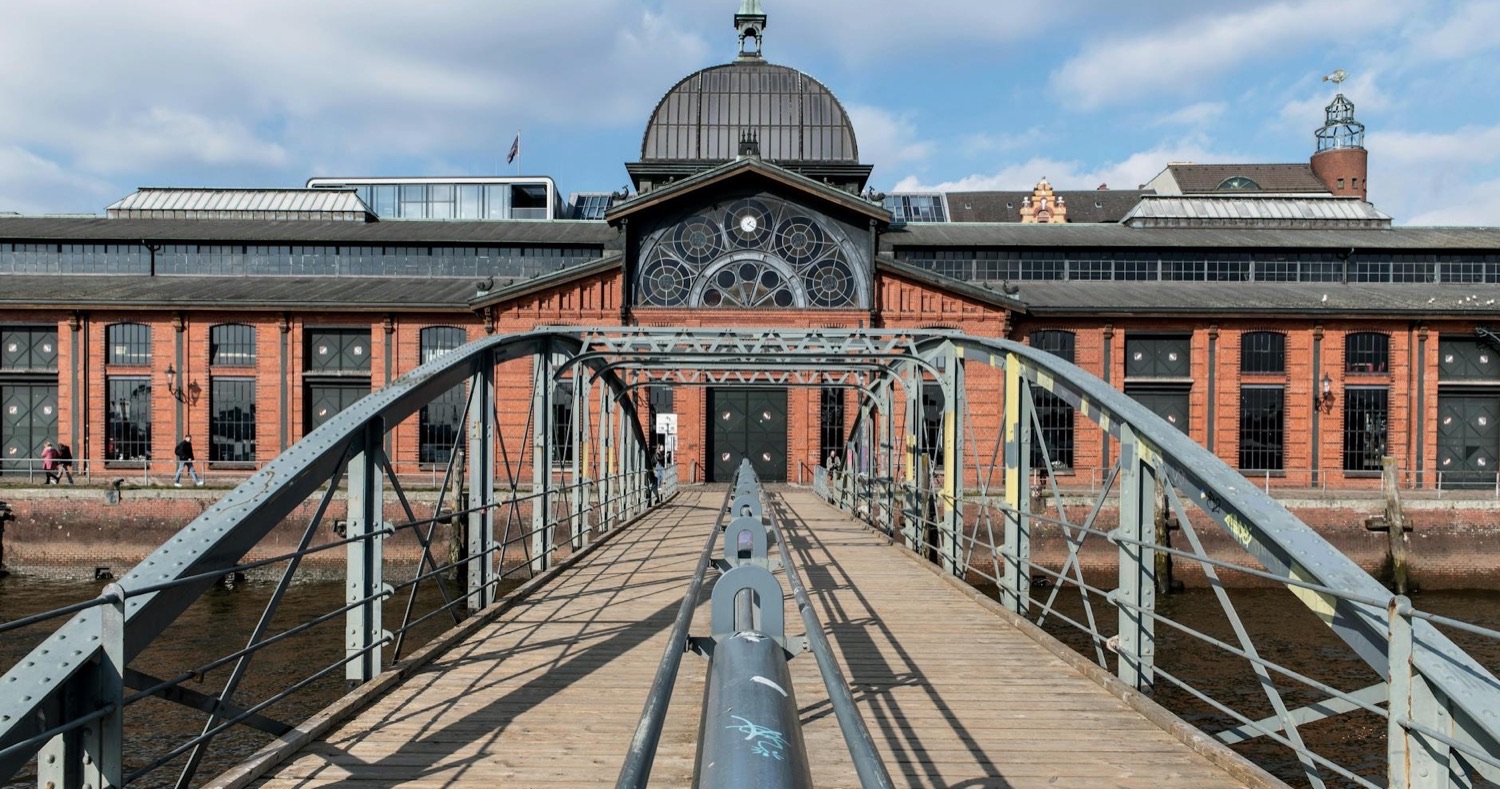
Fischauktionshalle and Altonaer Balkon, on the Elbe, with a view of the harbour.
Altonaer Rathaus, the landmark above the station.
Altona is mixed and international, from quiet residential streets to bustling Ottensen, with people from many countries.
Transport
Bahnhof Altona is served by long-distance trains (ICE), regional trains and the S-Bahn lines S1, S2, S3, S5 and more, plus numerous bus lines. From Hauptbahnhof to Altona it is about 10 minutes by S-Bahn. Ottensen is within walking distance of the station.
Nearest hospital with an emergency room
The Asklepios Klinik Altona, Paul-Ehrlich-Straße 1, 22763 Hamburg, is right in the district. Phone: +49 40 1818-810. The central emergency room is open around the clock and is one of the largest in northern Germany. For a serious dental surgical emergency, a jaw fracture or an abscess with swelling, you don't have far to go.
Price level
Altona is mixed in price, from affordable in the residential streets to slightly higher in trendy Ottensen. Practically all practices are statutory dentists and bill standard services through the eGK. For orientation: professional cleaning 80-150 €, composite filling 80-200 €, bleaching 300-600 €.
Where to look for a dentist in Altona: 5 paths that work
Language preference isn't in any official database, but Altona is international and the choice is large. These five sources cover most cases in practice.
1. doc116.de with language filter
Hamburg's medical directory platform. It filters by Stadtteil, insurance type, specialty and sometimes by language. For Altona and Ottensen you get many results. Not every clinic keeps its profile up to date, so when you find a match, always confirm by phone or email.
2. Russian and Ukrainian-speaking Facebook groups
«Hamburger Mama» is especially active among young families. «Українці в Гамбурзі» and «Русские в Гамбурге» regularly have threads about doctors. A specific question like «dentist in Altona or Ottensen, Russian-speaking?» often gets useful answers. Recommendations from the last 12 months are reliable.
3. Asklepios Klinik Altona
For a dental surgical emergency, a jaw fracture or an abscess with fever: central emergency room, Paul-Ehrlich-Straße 1, 22763 Hamburg. The clinic employs assistant doctors from many countries, so your chance of finding a Russian or Ukrainian speaker is higher than at a single practice. The emergency room isn't meant for routine treatment, for that you need a private practice.
4. KZV Hamburg (kzv-hamburg.de)
The Statutory Dental Association lists every licensed dentist by postal code and district. For Altona, search with the postal codes 22765, 22767 and 22769. Language isn't a filter, but you do see address, phone and insurance status. Build a list of 7-10 practices and send a short email asking about language, about 60-70% reply in my experience.
5. Recommendations from the neighbourhood
Altona, and Ottensen especially, lives on a tight-knit neighbourhood. At the weekly markets, in the Kita and school parent chats, in the cafés, residents share names. If someone has been happy with a dentist for years, ask specifically: «Have they done a bridge, a root canal or an implant for you? How did they explain it? What was the HKP (treatment and cost plan) like?»
A practical tip
Before you visit, send a short email: «Hello, I live in Altona and I'm looking for a dentist who speaks Russian or Ukrainian. Is that possible at your practice? If not, could you recommend a practice in Altona or Ottensen?» In such an international district, there's a good chance that someone on the team speaks your language or has a recommendation.
12 rules to recognise the right dentist
Not every dentist is the same, even with identical training. After 16 years of practice, within the first minutes I can tell whether a clinic works seriously or superficially. This list comes from my own experience, not from a textbook. I've grouped it around the four stages of your journey as a patient.
🔍 Before the appointment
1. A treatment plan with costs before anything starts. The HKP (Heil- und Kostenplan) should be in your hand before any work begins. Under § 87 Abs. 1a SGB V it's mandatory for larger treatments. No signed plan means you don't know the price. And if complications come up, there's nothing to point to.
🪑 At the first appointment: what to watch
2. An X-ray at the first consultation. Without an image the dentist can't see the bone, hidden caries under fillings, cysts, the state of the roots. If they want to treat without an X-ray, stand up and leave. It's that simple.
3. After the consultation, everything is clear. What's wrong, what they'll do, in what order, how long it takes and how much it costs. If you walk out with fog in your head, that's not your dentist. A good one explains until you nod, not until he's finished talking.
4. The dentist builds the plan around your goals. One patient just wants «no pain», another wants a perfect smile, a third wants to save money for the kids. A good dentist asks what you want first, then builds the plan around it. Someone who arrives with a fixed agenda and never asks is treating for themselves, not for you.
5. Hygiene in the room is visible. Sterilisation in front of you. Packages opened in your presence. Gloves changed between patients. A fresh mask. This is the baseline, and you read it at a glance.
6. The team matters as much as the dentist. If reception is rude, that's a mirror of the whole clinic. A good assistant remembers your name and calmly repeats whatever you didn't catch. The team gives away the culture of the place.
🩺 How a professional approaches treatment
7. A systematic view, not just «where it hurts». One tooth hurts, but the dentist looks at your whole mouth, your bite, your gums, considers whether stress or grinding is the cause. A patch without diagnosing the cause comes back to you within a year.
8. At least 2-3 treatment options. A cavity can be closed with a filling, an inlay or a crown. A good dentist explains each option with its price and lifespan, rather than handing you «the one right solution». You decide together with them, not them for you.
9. The documents belong to the patient. X-rays, photos, treatment plan. A copy on request is mandatory (§ 630g BGB). If a clinic refuses or drags its feet on handing them over, that's a red flag.
10. No threats, no pressure. «If you don't get an implant now, the bone will be gone in 3 months» is manipulation. A good dentist advises, doesn't pressure. The right to think it over and get a second opinion stays with you. Anyone pushing for an immediate decision is thinking about their revenue, not your health.
🔄 After the appointment: the long view
11. Trust in the dentist. Without trust, a patient shuts down, stays quiet about symptoms, doesn't come back. And trust is half the success of treatment. If you don't feel it, keep looking. It's not a verdict on the dentist, it's about your health.
12. Recall: the dentist reminds you. Six months later, a reminder for a checkup arrives. A clinic that runs systematically tracks its patients, not just its files. Complete silence after the first visit is a bad sign for a long relationship.
I've put the full list of all 12 rules, the questions for your first consultation and a printable checklist into one PDF. Free, no obligation, sent by email.
📄 PDF: 12 selection rules + questions for the first consultation
A compact, printable overview. In English and German. Sent to your email within minutes.
What to ask at the first consultation
The first consultation is a test for both sides, for you and for the clinic. These questions clear up most misunderstandings before they ever arise.
- Which treatments are covered by statutory insurance, and which are private? The HKP is mandatory above a certain amount. Ask for a clear breakdown of what goes through the fund and what is private.
- How are costs handled if complications arise? Sometimes it turns out mid-treatment that a root canal is needed instead of a filling. Who covers the extra cost?
- Will I get a written HKP before treatment starts? For any work above 200 € of your own contribution, this is standard. No written plan? Be cautious.
- What experience do you have with patients whose first language isn't German? An open question that immediately reveals the practice's attitude. Empathy or condescension comes through right away.
- How do I reach the practice in an emergency at the weekend? Many Altona practices work with on-call services or refer you to the Asklepios Klinik Altona.
- Will I get my photos or X-rays for my own file before we begin? A serious clinic gives patients access to their data. A refusal is a signal.
The advantage of Altona: international and well-served
Altona has always been an international district. People from many countries live here side by side, and many practices are used to treating patients whose first language isn't German. Add to that the good infrastructure: a major station, the Asklepios Klinik with an emergency room in the district, many practices in Altona and Ottensen.
That makes the search more relaxed than in many other districts. Still, the rule holds: check each practice yourself. Qualification, language and trust beat location. Always.
Questions about dentistry in Germany?
Leave your contact and I will personally reply. Language of your choice: Ukrainian, Russian, English or German.
🗓 Appointment with Andrii Marenkov, Hamburg
Leave your email or phone. I'll get back to you personally.
📖 Read also: Dentist prices in Hamburg 2026: overview